
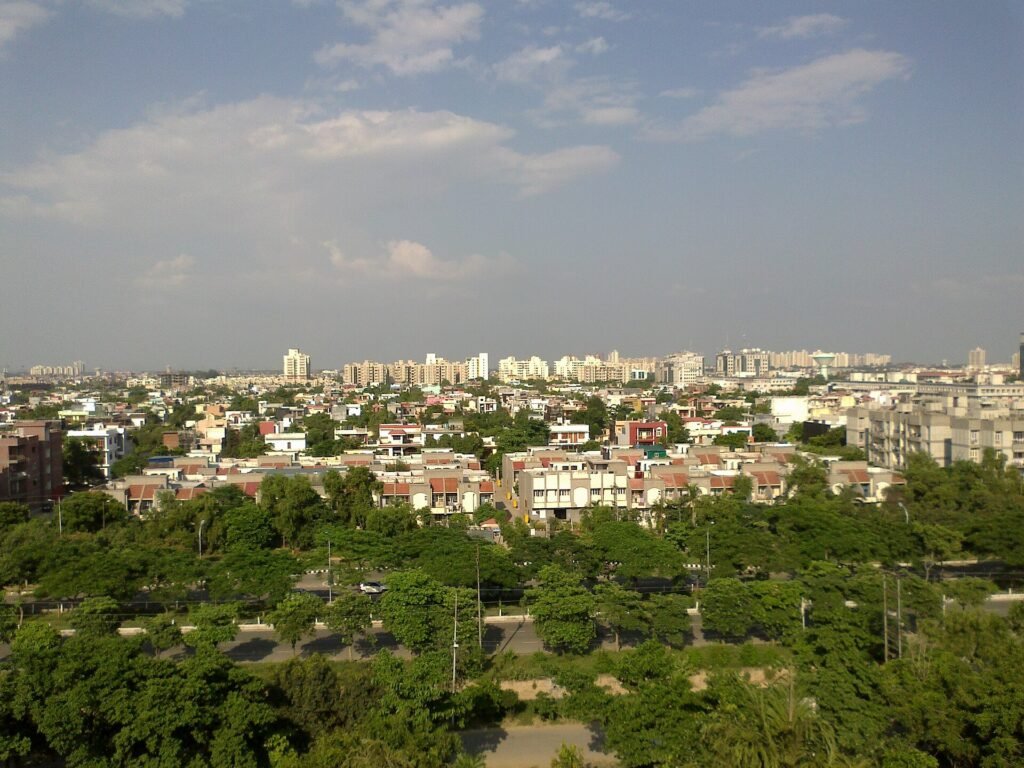
Most property problems in Greater Noida begin before the registry. A buyer pays a token, signs an agreement, and only later finds unpaid authority dues, a missing transfer, a loan still running on the property, or a seller who never had full rights. Most of these problems can be found in advance. You just have to know which records to check and where they are kept.
This guide covers how we verify a property in Greater Noida before a client commits money. It applies to authority plots, flats and village land. It is general information, not legal advice. For any purchase, have a qualified property lawyer review the final documents.
Step 1: Identify what kind of property it is
In Greater Noida, the right checks depend on who sits at the top of the title chain:
- Greater Noida Authority (GNIDA) allotments. Residential, commercial, industrial and institutional plots, and authority flats. The authority allots them, executes a lease deed, and has to record every transfer.
- Builder flats and plotted projects. A developer holds the land (often on lease from the authority) and sells units. Projects above the size limits in the Real Estate (Regulation and Development) Act, 2016 must be registered with UP RERA.
- Village or private land. Abadi or agricultural land recorded in the revenue records, not allotted by the authority.
Each category has its own “source of truth”: the authority’s records, the RERA registration, or the revenue records. Find out which one applies first, then verify against it.

Step 2: Collect the full document set
Ask the seller for copies first and check them against the originals before any payment. For an authority plot or flat on resale, the usual set is:
- Allotment letter from the authority in the original allottee’s name.
- Lease deed executed by the authority and registered at the sub-registrar office.
- Possession certificate or possession letter.
- Transfer memorandum(s) for every earlier transfer, if the seller wasn’t the original allottee. The transfer memorandum is the authority’s record that the property moved to a new allottee.
- No-dues proof from the authority covering premium, lease rent and other charges, plus the latest water bill for flats.
- Building plan approval and completion or occupancy certificate, if anything has been built on the plot.
- Mortgage permission and loan closure letter, if the property was ever financed.
- Identity and address proof (Aadhaar, PAN) of every seller who will sign.
For a builder flat, add the builder-buyer agreement, the allotment letter, the payment receipts, the RERA registration details and, at possession, the occupancy certificate and the builder’s no-dues. Ask whether the sub-lease or conveyance deed has been registered. For village land, the core documents are the khatauni, the chain of registered sale deeds and the mutation orders.
Step 3: Verify authority records directly
Don’t rely on a printout handed over by the seller. Check the records with the authority. GNIDA’s official website is greaternoidaauthority.in, and it links to the authority’s online services and allottee portal, where allottees can view their payment position and apply for services. In practice:
- Ask the seller to log in to the allottee portal in front of you, or to share a current statement of dues generated from it.
- Check that the allottee name, plot or flat number, sector and area match the lease deed exactly.
- Find out what the authority needs for the transfer in your name: the forms, documents, charges and any pending dues that must be cleared first. In practice the transfer won’t go through while dues are outstanding.
For plots on the Yamuna Expressway side, the same logic applies with YEIDA. Its citizen services (lease deed, transfer of plot or flat, no dues, mortgage, name correction and others) are listed on yamunaexpresswayauthority.com. We have covered Jewar-area plots in detail in our YEIDA plot buyer checklist.
Step 4: Check the RERA registration (builder projects)
For a builder project, search on up-rera.in:
- Registered Projects: confirm the registration number, the promoter’s name, the declared completion date and the sanctioned plan.
- De-registered, NCLT and abeyance lists: make sure the project isn’t on any of them.
- Complaints: a project with many complaints is a reason to ask harder questions, not always a reason to walk away.
- Registered Agent: if a dealer is selling a RERA project, they should have an agent registration you can check.
Step 5: Read the khatauni for village or private land
The khatauni is the revenue record of rights. In Uttar Pradesh it is available through the Bhulekh portal at upbhulekh.gov.in, where you search by district, tehsil, village and khasra or gata number. Check:
- That the seller is recorded as an owner of that exact khasra number, and what share they hold.
- That every co-owner who needs to sign will sign.
- The land category, and any entries that suggest a dispute, a government interest or a restriction on transfer.
- That mutation has been done after the seller’s own purchase. A registered deed without mutation is an unfinished title.
Also check whether the land falls inside a notified authority area or is under acquisition. Building on such land usually needs authority sanction, and that is where many “low-price plot” deals go wrong.
Step 6: Search registered transactions, loans and court cases
- Encumbrance certificate (bhar-mukt praman patra). Apply on the Stamp and Registration Department portal, igrsup.gov.in, or at the sub-registrar office. It lists registered transactions such as sales and mortgages for the period you request, so choose a long period. It does not show unregistered agreements or court cases.
- CERSAI search. Banks and lenders register security interests on CERSAI, which offers asset-based and borrower-based searches. Use it to check whether a loan is still recorded against the property.
- Court cases. Search the seller’s name (and the earlier owners’ names, where practical) on eCourts Services for Gautam Buddh Nagar district.
- Bank NOC. If the seller has a running home loan, the bank has to be part of the closing. It needs to issue a loan closure letter and return the original documents.
Step 7: Physical and practical checks
- Visit the property. Match the plot or flat number, area and boundaries against the lease deed and layout plan.
- For flats, check for society or maintenance dues and get the association’s no-dues letter if there is one.
- Check electricity and water connections and the latest bills in the seller’s name.
- For plots, look for encroachment, unauthorised construction or disputes with neighbours. If the boundaries are unclear, ask for a demarcation.
Step 8: Get the money side in writing
Before you pay a token, write down the total cost: the agreed price, authority transfer charges where they apply, stamp duty and registration fees, legal fees and brokerage. Stamp duty and circle rates are set by the state government. Check the current figures on igrsup.gov.in or with the sub-registrar office. The token agreement should name the property, the price and the timeline, and say what happens to the token if the verification fails.
Common red flags
- A seller who can show photocopies only, or “will bring the originals at registry”.
- Authority transfers that are “in process” for years with no authority receipt.
- A price far below what nearby properties sell for, with pressure to decide today.
- A power-of-attorney sale instead of a proper registered transfer, with no clear reason why.
- Village land described as “authority-approved” without any authority document.
Summary checklist
- Property type identified (authority allotment, builder project or village land).
- Full document set seen in original and matched to each other.
- Dues and transfer requirements confirmed with GNIDA or YEIDA.
- RERA registration and agent registration checked (builder projects).
- Khatauni and mutation checked (village land).
- Encumbrance certificate, CERSAI and eCourts searches done.
- Site visit, dues and utility checks done.
- Cost sheet and token terms in writing, and a lawyer’s review before registry.
Need help checking a property?
Our team works from Kasna in Greater Noida and deals in authority plots, resale flats and Yamuna Expressway land every day. Send us the details of the property you are considering and we will tell you which papers to ask for. Browse property dealers in Greater Noida, residential plots in Greater Noida or property dealers in Noida, or contact us to book a visit.
This article is general information, not legal advice. Processes, charges and portal menus change. Confirm current details on the official websites linked above and have a qualified lawyer review documents before you buy.